

By Angelina Soria
April 2025 | 2025 Spring Newsletter
The Centers for Disease Control and Prevention (CDC) consider skin cancer the most common cancer in the United States. Every May, healthcare facilities raise awareness and provide prevention tips highlighting the importance of protecting our skin from harmful UV light exposure.
Avoid tanning or using sunlamps. Protect yourself from the sun by using sunscreen, staying in a shaded area, and wearing clothing that can protect you from the sun.
Healthcare professionals suggest that everyone should regularly examine their skin by conducting a skin self-exam once a month. Regular self-exams
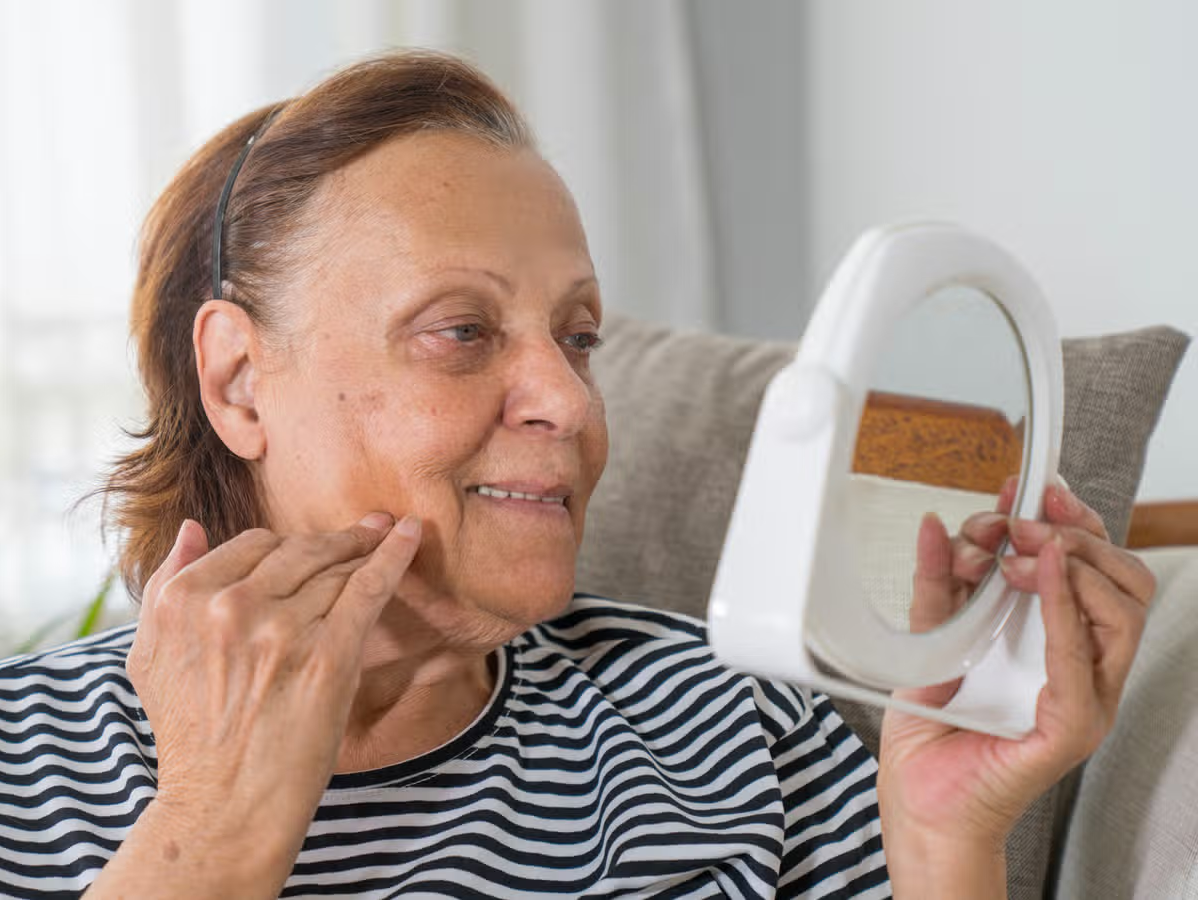
are particularly crucial for individuals at a higher risk of skin cancer, including those with weakened immune systems, those who previously had skin cancer, individuals with numerous moles or skin spots, and those with a significant family history of skin cancer.
The ideal time to check your skin is after a bath or shower. The following will be needed for the skin self-exam:
- A well-lit space
- A full-length mirror
- A hand-held mirror for hard-to-see areas
- A partner, friend, or family member to assist with areas like your back or scalp
When looking for potential skin cancers, remember that they often appear on sun-exposed areas like the face, head, neck, and arms, but they can develop anywhere on the body.
Skin cancers can vary in appearance and may resemble other non-cancerous skin conditions. Common signs of skin cancer include:
- A new, growing, or changing spot, bump, or growth on the skin
- A sore that bleeds or doesn’t heal after several weeks
- A rough or scaly red patch that may crust or bleed
- A wart-like growth
- A mole or other skin spot
Discuss any concerning areas with your doctor. Examine all moles, blemishes, or birthmarks from head to toe. Regularly checking your skin will make you more aware of what is normal and abnormal.
If you notice anything unusual on your skin or are unsure how to perform the self-exam, consult your doctor. Consider taking close-up photos of the area of concern every few days to assist your doctor in assessing any changes before your appointment.
For more information on skin cancer, visit cdc.gov/skin-cancer/about or cancer.gov/types/skin/patient/skin-prevention-pdq.
The Centers for Disease Control and Prevention (CDC) consider skin cancer the most common cancer in the United States. Every May, healthcare facilities raise awareness and provide prevention tips highlighting the importance of protecting our skin from harmful UV light exposure.
Avoid tanning or using sunlamps. Protect yourself from the sun by using sunscreen, staying in a shaded area, and wearing clothing that can protect you from the sun.
Healthcare professionals suggest that everyone should regularly examine their skin by conducting a skin self-exam once a month. Regular self-exams
are particularly crucial for individuals at a higher risk of skin cancer, including those with weakened immune systems, those who previously had skin cancer, individuals with numerous moles or skin spots, and those with a significant family history of skin cancer.
The ideal time to check your skin is after a bath or shower. The following will be needed for the skin self-exam:
- A well-lit space
- A full-length mirror
- A hand-held mirror for hard-to-see areas
- A partner, friend, or family member to assist with areas like your back or scalp
When looking for potential skin cancers, remember that they often appear on sun-exposed areas like the face, head, neck, and arms, but they can develop anywhere on the body.
Skin cancers can vary in appearance and may resemble other non-cancerous skin conditions. Common signs of skin cancer include:
- A new, growing, or changing spot, bump, or growth on the skin
- A sore that bleeds or doesn’t heal after several weeks
- A rough or scaly red patch that may crust or bleed
- A wart-like growth
- A mole or other skin spot
Discuss any concerning areas with your doctor. Examine all moles, blemishes, or birthmarks from head to toe. Regularly checking your skin will make you more aware of what is normal and abnormal.
If you notice anything unusual on your skin or are unsure how to perform the self-exam, consult your doctor. Consider taking close-up photos of the area of concern every few days to assist your doctor in assessing any changes before your appointment.
For more information on skin cancer, visit cdc.gov/skin-cancer/about or cancer.gov/types/skin/patient/skin-prevention-pdq.