

By Vi Lam
January 2026 | 2026 Winter Newsletter
Observed every January, National Glaucoma Month generates awareness about this common eye condition in the United States. It is a condition that can harm the optic nerve, which connects the eye to the brain, and can lead to blindness. According to data from the Centers for Disease Control and Prevention (CDC), 50% of people with glaucoma do not realize they are living with it because there are no symptoms. It is estimated that around 3 million Americans have glaucoma, making it the second leading cause of blindness worldwide.
The four main types of glaucoma that can lead to blindness in the U.S. are:
- Open-angle glaucoma: The most common form that tends to run in families, and the exact cause is unknown. It gradually raises eye pressure over time, which can cause blind spots in your vision.
- Angle-closure glaucoma (or closed-angle glaucoma): A serious spike in eye pressure caused by a sudden blockage of fluid that cannot drain out of the eye. It can sometimes be triggered by dilating eye drops.
- Congenital glaucoma: It runs in families and is usually noticeable in babies since it’s present at birth, affecting normal eye development.
- Secondary glaucoma: It can stem from open-angle or closed-angle glaucoma, but its exact cause is still unknown. Factors such as medication, eye diseases, health conditions like diabetes, or eye injuries can lead to secondary glaucoma.
Currently, there is no cure for glaucoma, but early detection and prevention can help preserve your vision and prevent further loss. You can learn more about glaucoma at medlineplus.gov/ency/article/001620.htm.
Anyone can be at risk, but the following populations are at higher risk for glaucoma:
- All individuals 60 years of age and older
- African Americans 40 years of age and older
- People with a family history of glaucoma
- Individuals with diabetes
Taking steps to protect your vision is essential. Join others in January to learn about and advocate for National Glaucoma Month.
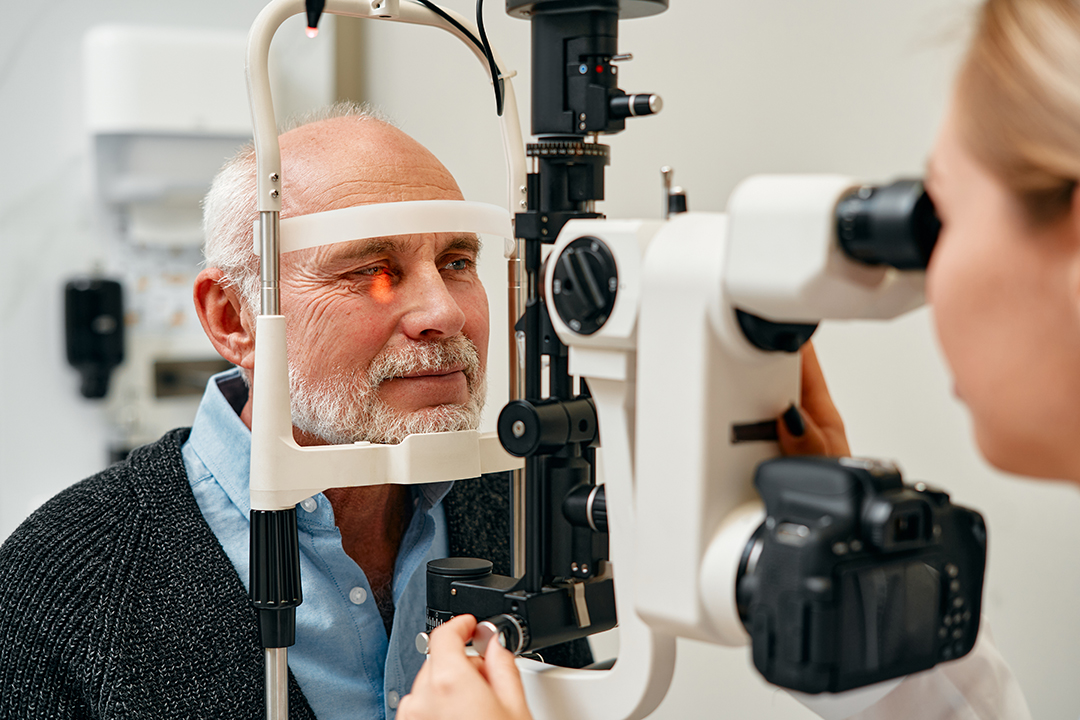
Start by visiting the CDC’s information on Glaucoma at cdc.gov/vision-health/about-eye-disorders/glaucoma.html or speak with your eye doctor for a thorough eye exam.
Observed every January, National Glaucoma Month generates awareness about this common eye condition in the United States. It is a condition that can harm the optic nerve, which connects the eye to the brain, and can lead to blindness. According to data from the Centers for Disease Control and Prevention (CDC), 50% of people with glaucoma do not realize they are living with it because there are no symptoms. It is estimated that around 3 million Americans have glaucoma, making it the second leading cause of blindness worldwide.
The four main types of glaucoma that can lead to blindness in the U.S. are:
- Open-angle glaucoma: The most common form that tends to run in families, and the exact cause is unknown. It gradually raises eye pressure over time, which can cause blind spots in your vision.
- Angle-closure glaucoma (or closed-angle glaucoma): A serious spike in eye pressure caused by a sudden blockage of fluid that cannot drain out of the eye. It can sometimes be triggered by dilating eye drops.
- Congenital glaucoma: It runs in families and is usually noticeable in babies since it’s present at birth, affecting normal eye development.
- Secondary glaucoma: It can stem from open-angle or closed-angle glaucoma, but its exact cause is still unknown. Factors such as medication, eye diseases, health conditions like diabetes, or eye injuries can lead to secondary glaucoma.
Currently, there is no cure for glaucoma, but early detection and prevention can help preserve your vision and prevent further loss. You can learn more about glaucoma at medlineplus.gov/ency/article/001620.htm.
Anyone can be at risk, but the following populations are at higher risk for glaucoma:
- All individuals 60 years of age and older
- African Americans 40 years of age and older
- People with a family history of glaucoma
- Individuals with diabetes
Taking steps to protect your vision is essential. Join others in January to learn about and advocate for National Glaucoma Month.
Start by visiting the CDC’s information on Glaucoma at cdc.gov/vision-health/about-eye-disorders/glaucoma.html or speak with your eye doctor for a thorough eye exam.